



transformation
 Ollersdorf, Austria
Shared energy in action: Osimo explores the future of Renewable Energy Communities
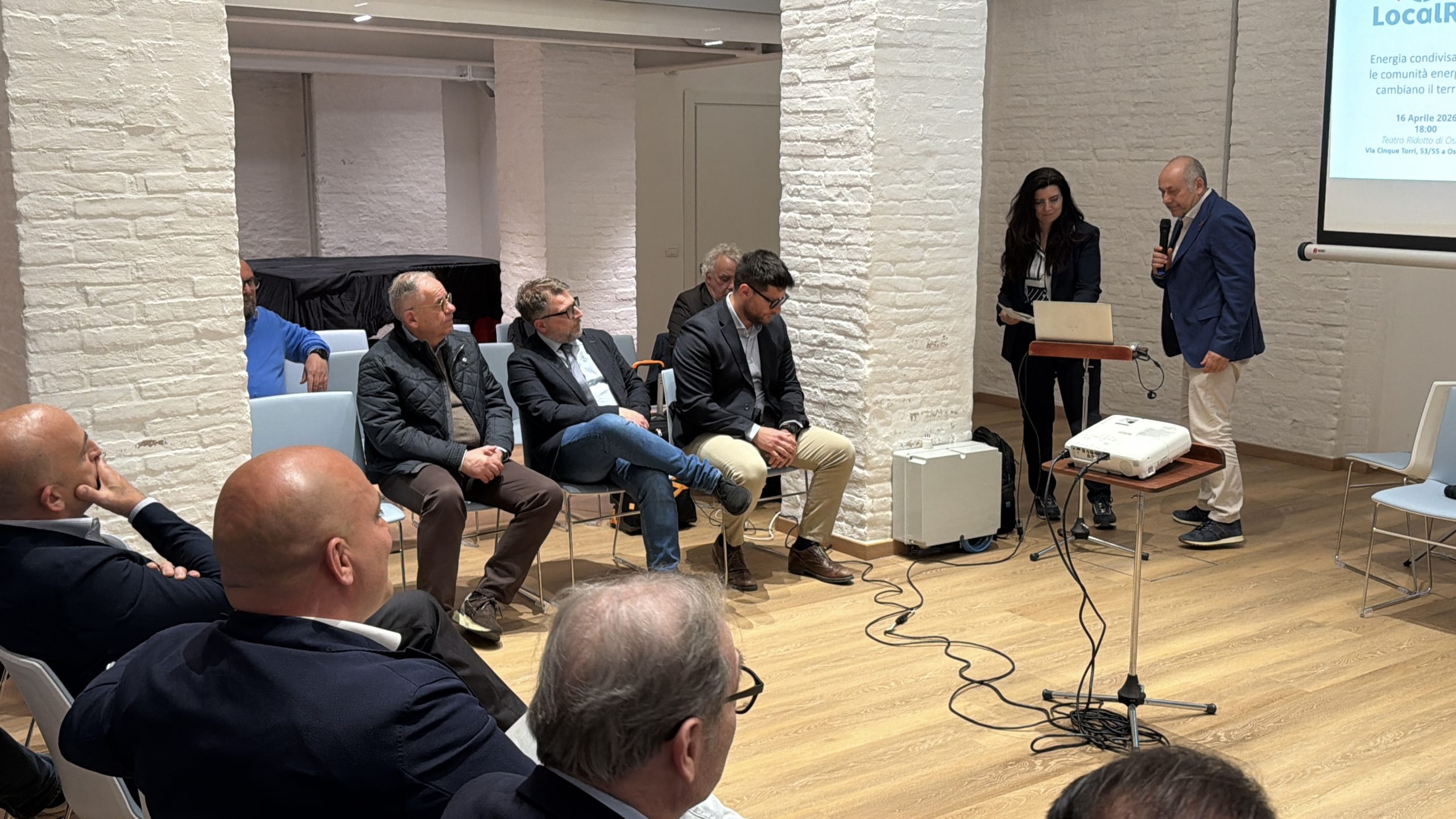
On 16 April 2026, the LocalRES project partner ASTEA S.p.A. organised the workshop “Energia condivisa: come le comunità energetiche cambiano il territorio” at the Teatro Ridotto in Osimo, Italy. The event brought together local authorities, technical experts, energy stakeholders, citizens and institutional representatives to discuss how Renewable Energy Communities (RECs) can support the local energy transition.
The workshop opened with institutional remarks from Michela Glorio, Mayor of Osimo, Simone Pugnaloni, CEO of ASTEA, and Massimiliano Riderelli Belli, Director General of DEA. Technical contributions were provided by Erica Corradi from ASTEA’s Research & Development Department, Enrico Marchegiani from Revolt, and Gabriele Comodi, Vice-Mayor of Fabriano and Councillor for Ecological Transition and Innovation.
A central focus of the event was the LocalRES pilot in Osimo, one of the first Italian demonstrations of blockchain-based peer-to-peer renewable energy trading within a local community framework. The pilot involved 22 residential users taking part in a digital marketplace for the virtual exchange of locally produced renewable electricity. Between April and September 2025, the pilot monitored more than 46,000 kWh of photovoltaic production, contributing to a 38.6% reduction in electricity withdrawals from the national grid and an 11.85% reduction in electricity injected back into the grid.
Participants were introduced to the technical architecture behind the LocalRES platform, which combines smart meters, data gateways, blockchain technology and digital dashboards. These tools make it possible to record energy exchanges transparently, display real-time energy balances and encourage citizens to take a more active role in local energy systems.
The workshop also highlighted why Osimo offers a particularly promising context for the development of a city-wide REC. The municipality’s entire territory, with around 35,000 inhabitants, is connected to a single primary substation. This rare condition in Italy could allow the creation of one large REC covering the whole city. Discussions also showed how surplus renewable electricity already produced locally could be retained and shared within the territory instead of being exported to the national grid.
The experience of REC Città Appenninica, presented by the Municipality of Fabriano, broadened the discussion by showing how RECs can work across several municipalities and pursue wider social objectives, including support for vulnerable households and the reinvestment of energy benefits into the community.
Throughout the event, participants underlined the strategic role of municipalities in enabling RECs: coordinating governance, opening access to public infrastructure, supporting citizen engagement and ensuring that the value created by energy sharing remains local.
The Osimo workshop confirmed that Renewable Energy Communities are more than technical or regulatory tools. They can become drivers of territorial cohesion, local economic development and a fairer energy transition. Through LocalRES, Osimo has shown how digital innovation, citizen participation and renewable energy sharing can come together to build more decentralised and resilient local energy systems.
